A plan can make a building look resolved while leaving an awkward entrance, a dark corridor or a staircase that dominates the space. Architecture students learn to notice those problems and work through them in drawings, models and repeated discussions. Poland offers a varied setting for that education. Choosing a course means looking at what happens in the studio as closely as at the buildings outside it.
A proposal has to work for its users
Studio work asks students to connect a spatial idea with the people who will use it. Where do they arrive, how do they find their way and what happens when the building is busy? Structure, daylight, accessibility and materials gradually enter the answer. A sketch is the beginning of the conversation; a proposal has to hold together when those practical questions are put to it.
Much of the work happens through design studios, where ideas develop by iteration. A tutor may ask for a new section drawing because a plan hides a problem. Classmates may question whether a public building feels welcoming. Learning to receive criticism without losing curiosity is a central part of the experience.
The city as a place to study
A building belongs to a larger landscape. Architecture education often introduces urban design, settlement patterns, heritage conservation and public space. Poland offers unusually varied settings for observing those problems: reconstructed historic centres, nineteenth-century streets, post-war housing estates and recent commercial districts. None should be viewed only as a photograph. What matters is how people move and live there.
Try taking a sketchbook through a neighbourhood and recording five details: pedestrian routes, places to rest, noise, ground-floor uses and access for people with limited mobility. Such an exercise reveals why successful architecture is as much about observation as creative expression.
What a portfolio can reveal
Applicants sometimes ask whether they must already draw perfectly. Drawing ability is valuable, but architecture also requires spatial reasoning, careful measurement and the willingness to revise. Universities may examine portfolios or set drawing-related recruitment tasks, yet requirements vary between institutions and degree levels.
An effective portfolio explains a process. Show early studies, alternative layouts, models and a final proposal. A simple project developed thoughtfully may say more than a highly polished image without evidence of reasoning. If you have no architectural work, observational sketches, photography or small design studies can demonstrate curiosity—but first check what the admissions committee actually accepts.
Checking the route in Kraków
Cracow University of Technology publishes a recruitment pathway for English-language architecture, including information about portfolio assessment and language documentation for the relevant second-cycle studies. This illustrates two important points. First, an English-speaking applicant should find the exact degree level before applying. Second, a portfolio can be a formal admissions element rather than an optional creative attachment.
Check current university pages rather than relying on archived announcements. The university may change start dates, tuition or submission formats from year to year. An Erasmus course catalogue listing English-taught classes does not, by itself, prove that an entire degree is available in English.
The rhythm of studio work
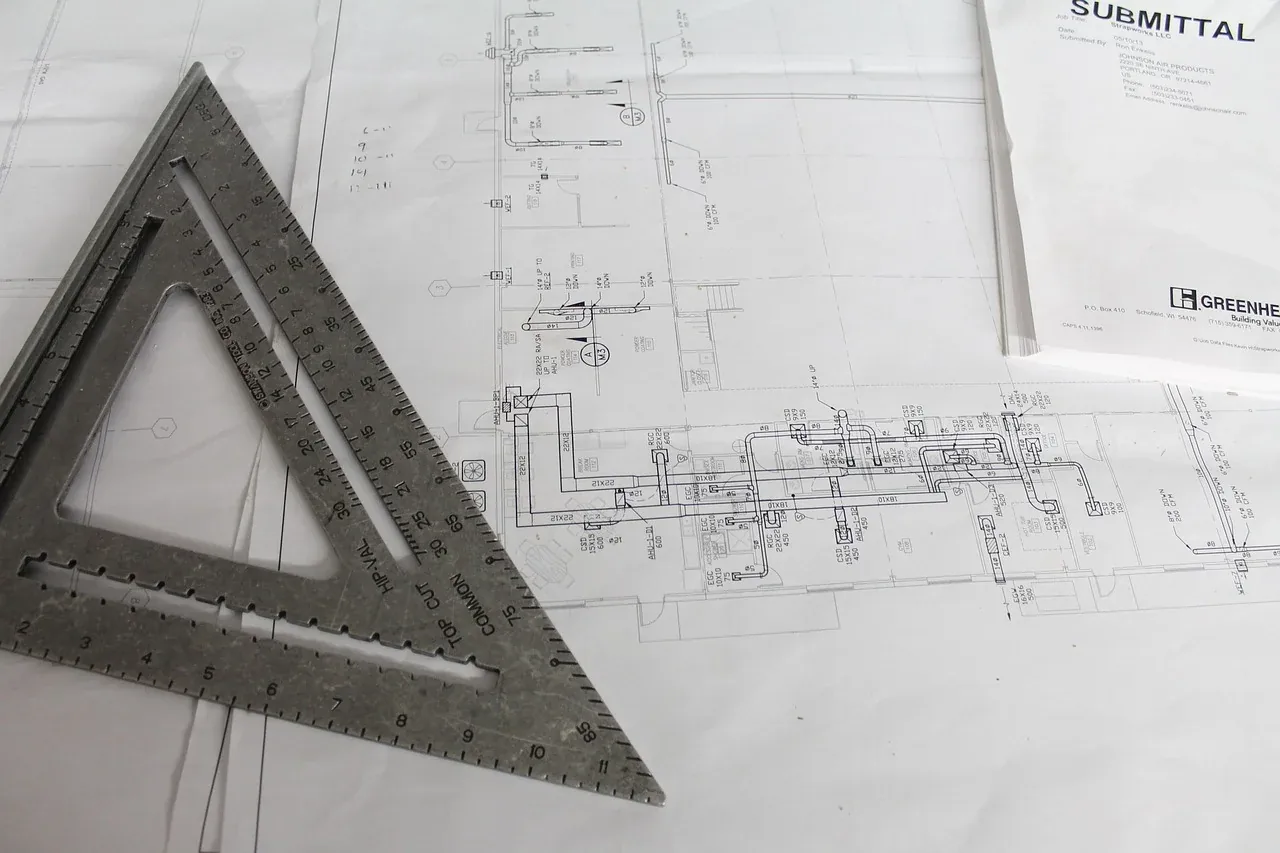
Studio projects demand sustained attention. Students may build models, create measured drawings, prepare presentations and revisit designs after feedback. Technical lectures cover structures, materials and building physics. History and theory classes ask why certain approaches emerged and how architecture influences communities. The timetable may be manageable, but final project weeks can be intense.
Ask about model-making facilities, access to digital fabrication and software licences, but also about studio supervision and assessment criteria. Buildings designed only for attractive visualisation can overlook difficult construction details. A strong programme helps students connect imagination to practical constraints.
Working with buildings that already exist
Architecture has a significant influence on resource use, energy demand and the quality of the built environment. A student should encounter questions about reuse, embodied materials, thermal comfort and adaptation to heat or heavy rain. Preservation can be a sustainable strategy when existing buildings can be responsibly adapted instead of replaced.
Review sample assignments, not only slogans about green architecture. Does the programme require environmental analysis? Are accessibility and lifecycle questions embedded in the studio brief? Can students examine real neighbourhoods or existing buildings? Specific examples reveal the depth of teaching.
Qualification and professional practice
An architecture degree does not necessarily grant immediate rights to practise independently. Within the EU, architecture is among professions covered by sectoral recognition rules when the relevant conditions are met. There may still be required documents, professional registration and country-specific procedures. Graduates hoping to work elsewhere should check the destination country's professional authority before enrolling.
Other graduates may work in design support, urban research, visualisation, conservation or related fields, depending on their qualifications and skills. Avoid choosing an education solely on the expectation that a graduate will immediately become a licensed architect.
An hour spent observing an entrance
Choose a public building you can enter lawfully and observe it for a while. Record where people hesitate, which entrance they use and where light changes the character of a room. Sketch the movement through one floor. Then propose a change and explain what it would improve and what it would make harder.
This is a useful portfolio exercise because it shows a train of thought. An admissions reviewer can see how observation became a design decision. It also gives you something to discuss when asking a department about studio teaching: how often feedback happens, whether ideas are revised and how technical questions enter the project. Check the institution's own portfolio requirements before deciding what to submit.
Choosing a studio environment
Put studio projects, workshop access and assessment beside the formal admissions requirements. Ask how much work is individual, how reviews are conducted and whether equipment and software are available when deadlines approach. For an English-taught course, establish the language of compulsory teaching and thesis supervision.
The relationship with criticism matters too. A studio should give you reasons to reconsider a design, and the tools to improve it. If you enjoy observing a place, making a proposal and returning to it after an uncomfortable question, architecture has already given you a useful glimpse of its daily work.