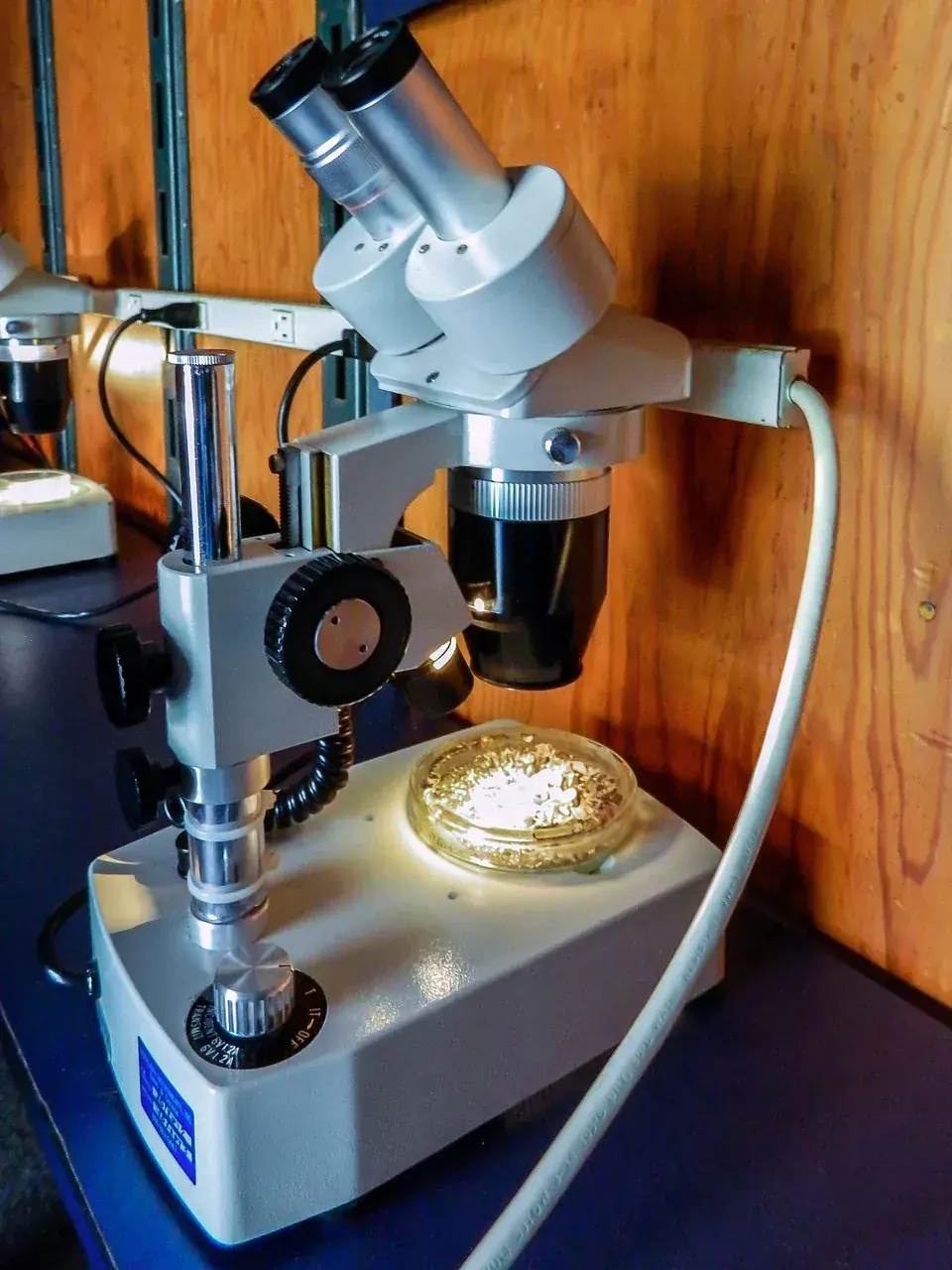
Labels, controls and a notebook rarely make the photograph accompanying a biotechnology breakthrough. They occupy a good deal of the work behind it. Students learn to prepare an experiment, recognise a problem and decide what a result can support. Poland has English-taught routes into biotechnology, but applicants need to distinguish their level and focus carefully, particularly when an attractive course is intended for graduates rather than school leavers.
Finding your part of a broad subject
Cells, enzymes, proteins and microorganisms give biotechnology a broad range of applications. A degree may concentrate on molecular research, biological production, food or environmental processes. The laboratory methods and scientific questions can differ substantially between those routes. Reading the compulsory modules is the first way to find out which version of the subject a programme actually teaches.
A class might ask how bacteria respond to changes in temperature, how an enzyme can be purified or how a genetic sequence should be analysed. No successful experiment is as simple as a photograph of a colourful laboratory flask. Students must plan controls, keep accurate notebooks, prevent contamination, calculate concentrations and explain why a result should—or should not—be trusted.
The science behind an experiment
Prospective students should enjoy both living systems and quantitative reasoning. Relevant coursework often includes cell biology, molecular biology, biochemistry, genetics, microbiology and organic chemistry. Laboratory and computational modules may introduce analytical methods, bioinformatics, microscopy and statistics. Mathematics helps researchers design experiments and recognise when apparently striking differences may be caused by chance.
Students who prefer purely theoretical biology should investigate the proportion of compulsory laboratory work. Conversely, applicants interested in industrial production might seek courses that include chemical engineering, bioprocess design and quality control. Biotechnology is not one universal curriculum: a degree oriented towards molecular research can be very different from one focused on manufacturing processes or agricultural applications.
A graduate route at Jagiellonian University
Jagiellonian University's Faculty of Biochemistry, Biophysics and Biotechnology publishes an English-taught Molecular Biotechnology programme for the 2026/27 academic year. Its official syllabus specifies full-time second-cycle study lasting four semesters and leading to a master's qualification. That detail is critical: the programme is not an undergraduate option for someone applying directly after secondary school. Applicants need an appropriate previous higher-education qualification and must follow the admissions rules for graduate candidates.
The published programme includes compulsory and elective courses, diploma seminars and preparation for a master's thesis. Research experience is central to the way such degrees operate. Students should ask how thesis supervisors are allocated, what laboratories are accessible, whether research placements are possible and which techniques are taught through hands-on practice rather than lectures alone.
The patient work of laboratory preparation
Real laboratory progress depends on preparation. A student may spend much of a morning making buffers, calculating dilutions, labelling samples and checking equipment. In molecular biology, a small contamination problem can invalidate hours of work. Good protocols, suitable controls and a reproducible record are essential. Working safely with biological materials is also a formal responsibility, not an optional precaution.
In group experiments, clear communication helps identify mistakes before they become serious. Students learn to distinguish between a technical failure and a scientific result. If a protein is not detected, for example, the problem might involve the experiment, the sample or the underlying hypothesis. The ability to troubleshoot patiently is a career skill that applies far beyond university.
Reading the data as well as the sample
Modern biotechnology increasingly produces large volumes of information: DNA sequences, measurements from instruments and images of cells. Bioinformatics provides techniques for organising and interpreting such datasets. Depending on the course, students may encounter databases, statistical tools or programming languages such as Python or R. The purpose is not necessarily to turn every biotechnologist into a full-time software developer, but to enable researchers to handle evidence competently.
Data also create questions about privacy and responsible research, especially when human samples or medical information are involved. An interesting technological result does not remove the need for consent, ethical approval or appropriate data protection. These aspects should be visible in serious scientific education.
Different applications and different methods
Different specialisms ask very different questions. Medical biotechnology may investigate molecular diagnostics, biologically derived medicines or research methods for understanding disease. Food biotechnology might examine fermentation, microbial safety and production processes. Environmental applications can involve wastewater treatment, microbial remediation or methods for monitoring ecological changes. Each area has its own safety standards, regulatory requirements and technical vocabulary.
Before choosing a degree, identify which activities excite you: designing experiments, developing industrial processes, using computational tools, interpreting clinical research or working with environmental samples. Look at actual final-year projects or research groups rather than assuming that the word biotechnology means the same thing at every institution.
The experience behind a first laboratory job
Graduates may pursue research, laboratory analysis, pharmaceutical or food-industry roles, production quality, technical sales or further doctoral study, depending on their training and experience. The job title and level of responsibility will vary. Some specialist positions require further degrees, professional qualifications or familiarity with a regulated process. A master's degree is valuable, but it cannot substitute for the exact experience demanded in every laboratory.
International applicants should investigate language requirements before assuming that English-language teaching guarantees English-language employment. Research groups can be multilingual, while local industrial sites may operate largely in Polish. Ask current students or alumni about internships, supervision and the transition into jobs without relying on broad promises of a booming industry.
Choosing a laboratory environment
Ask prospective supervisors what students do themselves in the laboratory, how projects are allocated and what happens when an experiment needs to be repeated. Access to equipment matters, but so do supervision, preparation and enough time to learn from an unhelpful result.
For a graduate programme, make the entry requirements an early part of the enquiry. Prior subjects and qualifications determine whether the route is open to you. Then compare the research groups and methods with the work that holds your attention. Biotechnology offers many destinations; understanding the daily scientific practice is a firmer starting point than choosing by the most exciting headline.