Polish museums cover far more than royal portraits and ancient objects. Industrial heritage, Jewish history, contemporary art and the Second World War are all presented through major public collections. A thoughtful museum visit can give crucial context to the place where you are studying.
Choose a museum by the question you want to explore
- For the Second World War and civilian experience, start with the Museum of the Second World War in Gdańsk.
- For the history of the 1944 Warsaw uprising, consider the Warsaw Rising Museum. This is a different subject from a general history of the war.
- For painting and other visual arts, examine the National Museum in Warsaw's permanent collections.
- For mathematics, codebreaking and technology, look at Centrum Szyfrów Enigma in Poznań, which tells the story of Rejewski, Różycki and Zygalski.
Choose one substantial museum for a day rather than treating this list as a route. A student of computer science might get more from the cryptology exhibition than from a famous art collection; a history student may make a different choice.
Museums can explain difficult history
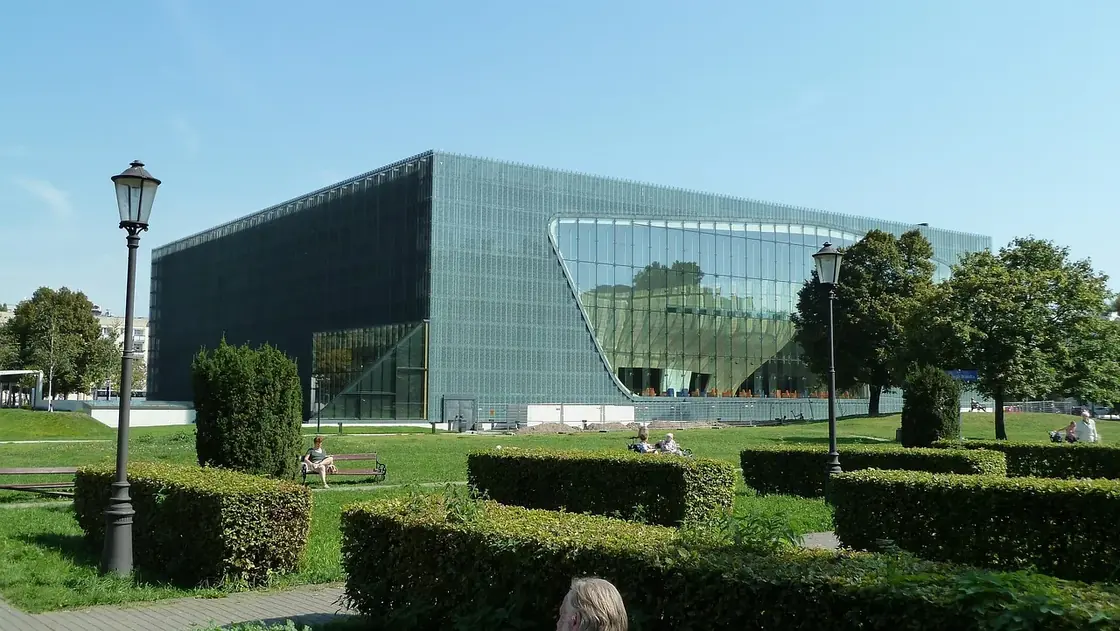
The Museum of the Second World War in Gdańsk presents history on a scale that can be emotionally demanding. It is located near the city centre and connects to wider stories of European conflict and civilian life. Make time for the visit and check whether any galleries are temporarily closed; the museum publishes visitor notices and guidance on its website. Warsaw's POLIN Museum of the History of Polish Jews provides another essential perspective on the country's long and complex past. These institutions should not be treated as interchangeable tourist checkboxes. Read the exhibition descriptions, approach sensitive material thoughtfully and leave yourself time to reflect rather than planning a party immediately afterwards.
Contemporary art offers a different conversation
An art museum or gallery does not need to be an exercise in identifying famous names. Contemporary exhibitions can introduce questions about public space, identity, technology and memory that connect naturally with university studies. Check a venue's online description to understand the curator's themes and whether explanatory material is available in English. Many Polish cities also have smaller municipal galleries and student exhibitions alongside major national institutions. If you find an installation puzzling, read the artist's statement rather than dismissing it. Discussing what you saw with classmates can be a practical language-learning opportunity as well as an introduction to different perspectives.
Discover music outside the obvious venues
Poland's cultural calendar includes classical concerts, jazz, contemporary music, theatre and festivals of many sizes. Warsaw has strong associations with Fryderyk Chopin, while other cities support distinctive musical traditions and venues. Student audiences can look for university concerts, conservatoire performances and municipal events, some of which are affordable or free. Do not assume every performance is in a language you understand: an instrumental programme may be an easier first experience than a spoken-language theatre production. Check the venue's actual event details for age restrictions, ticket conditions and accessibility. A small local concert can be as memorable as a famous international festival.
Polish cinema is a window, not a summary
A film tells a particular story from a particular viewpoint. If you want to explore Polish culture through cinema, try one historical film, one contemporary drama and one documentary rather than expecting a single title to explain society. Independent cinemas and cultural institutions may host discussions, retrospectives or student screenings. Look for English subtitles before buying a ticket; some screenings may offer only Polish subtitles or none at all. Films can encourage questions about history, humour and social change, but verify factual claims elsewhere if the plot is based on real events. The best follow-up is often a conversation with someone who interpreted the film differently.
Check the exhibition and language before paying
Confirm whether your ticket covers the permanent exhibition, a temporary exhibition or both. Look separately for English labels, an English audioguide and guided visits in English; these are three different services. A museum's English website does not prove that every event is offered in English.
The National Museum in Warsaw and the Warsaw Rising Museum publish free weekday arrangements. Our free activities guide lists the checked days and conditions, so you can keep admission planning separate from choosing the right subject. Take evidence of your eligibility if booking a reduced ticket.
Before visiting with a wheelchair, a pushchair or sensory access needs, ask about the actual exhibition route, lifts and quiet visiting arrangements. An accessible entrance alone does not describe the whole visit.
A three visit semester plan
For the first visit, choose an exhibition directly connected to your course. Write down one question beforehand and identify an object or explanation that answers it. For the second, choose an unfamiliar subject with a classmate and compare your interpretations afterwards. For the third, attend a small exhibition, film screening or concert in your own university city.
Keep a short record of the ticket cost, transport, language support and what you would recommend to another student. A useful recommendation explains who would enjoy the visit and how to prepare, rather than calling every museum a must-see. Leave room to revisit an exhibition that deserves more attention.