Poland’s scientific history connects local laboratories and universities with international breakthroughs. Some careers also show how strongly research depends on international collaboration.
Copernicus changed the question in astronomy
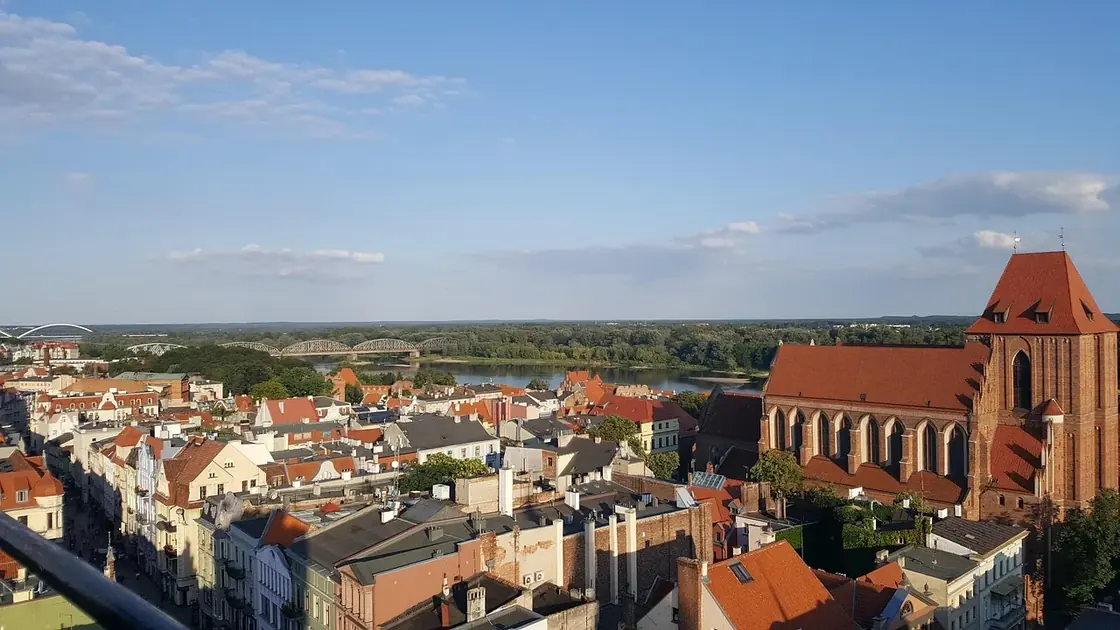
Nicolaus Copernicus was born in Toruń in 1473. His great intellectual contribution was the heliocentric framework presented in De revolutionibus orbium coelestium, published in 1543, which placed Earth among planets moving around the Sun. The model was not the final modern explanation of planetary motion: later astronomers, including Kepler and Newton, transformed how the heavens were understood. Its significance lies partly in questioning a longstanding structure of thought. In Toruń, visitors can explore institutions and public places associated with Copernicus, but a statue alone cannot explain his mathematics. Read a reputable account of the scientific debate and ask what evidence convinced later generations.
Maria Skłodowska Curie worked across borders
Born in Warsaw in 1867, Maria Skłodowska-Curie pursued higher education and research in Paris. She shared the 1903 Nobel Prize in Physics with Pierre Curie and Henri Becquerel, and won the 1911 Nobel Prize in Chemistry for work connected with radium and polonium. Her achievements should be described precisely, without erasing the colleagues and scientific institutions involved. The Nobel Foundation biography documents the international arc of her work. Her story is especially relevant to students weighing a move abroad: scientific opportunity often involves migration, language learning, laboratory collaboration and persistence in the face of barriers. National pride is understandable, but research is rarely contained within one national border.
Why polonium is more than a name
The chemical element polonium was named in reference to Poland, the country of Skłodowska-Curie's birth, at a time when Poland did not exist as an independent state. That connection has a historical dimension beyond chemistry. The investigation of radioactivity also changed scientific methods and eventually contributed to medical applications and new understandings of matter. None of this makes the early history simple or risk-free; research into radiation involved hazards that were not fully understood. Students interested in medicine or physics can explore how measurement, laboratory practice and ethical safeguards have evolved. A responsible account combines recognition of achievement with an appreciation of the dangers and limitations of the period.
Polish mathematicians and the Enigma cipher
Marian Rejewski, Jerzy Różycki and Henryk Zygalski made foundational contributions to breaking the German Enigma cipher before the Second World War. Rejewski's breakthrough in 1932 and the team's subsequent work showed how mathematical reasoning could be applied to machine encryption. Their contribution formed part of a wider Allied codebreaking history; it should not be reduced to a claim that one person invented the modern computer.
The Enigma Cipher Centre in Poznań presents the mathematicians' story and a chronology of the work. For a computer-science student, the useful question is what information the team could infer from the cipher's structure and how their methods developed as the system changed.
Turn scientific history into a visit
In Poznań, start with the Enigma Cipher Centre if cryptology interests you. In Toruń, use Copernicus-related museums and university historical resources to explore astronomy. In Warsaw, distinguish a historical visit about Skłodowska-Curie from an experimental science-centre visit: one explains a person's work and context, while the other lets visitors explore scientific principles.
Choose the kind of question you want answered before booking. Do you want original documents, a biography, a demonstration or an interactive experiment? Check the institution's current exhibition description for that purpose and for English interpretation. The most famous venue is not always the best match for the subject you are studying.
Three distinctions that keep the history accurate
Copernicus developed a heliocentric planetary framework; he did not supply all the later mathematics and physical explanations associated with modern astronomy. Skłodowska-Curie's research advanced the study of radioactivity; Henri Becquerel's discovery preceded her work. The Polish Enigma mathematicians made crucial early breakthroughs; Allied codebreaking continued through further people, institutions and technologies.
These distinctions make the achievements more understandable. When a popular account credits someone with an entire field, ask which experiment, theory or method is actually meant. Use the Nobel Foundation's biographical record, university histories and specialist museums to resolve the claim.
What a future student can take away
Poland's scientific heritage is an invitation to think about your own education, not merely admire famous portraits. Copernicus reminds us that powerful ideas can challenge established assumptions. Skłodowska-Curie's career illustrates international education and the long effort behind experimental research. Cryptanalysts show what mathematical teamwork can achieve under historical pressure. None guarantees that a particular university or programme will suit you. Compare modern study curricula, laboratories, language of instruction and academic opportunities independently. You may find that the most useful lesson from the past is not a heroic individual story but the importance of evidence, collaboration and intellectual courage.