Trams, buses and suburban rail services can turn a large city into a manageable place to live. But Poland does not have one universal urban ticket: each transport organiser sets its own zones, fares and validation rules. Understanding your local network is a first-week priority.
Choose the network before choosing the fare
Poland has separate local transport systems. A ticket bought for Warsaw does not cover a tram in Kraków, and a local bus ticket does not automatically cover a regional train. Start with the city, operator and travel zone, then choose the validity period.
For Warsaw, use WTP; for Kraków, ZTP publishes public-transport information. In the Tri-City, distinguish SKM rail from city buses and trams, and use an explicitly valid integrated ticket if you want to combine systems.
Student concessions also differ. Warsaw's official tourism guide describes half fares for qualifying foreign-school students under 26 with ISIC and the required identity evidence. That must not be confused with the 51% statutory concession for eligible national rail travel. The rail guide explains the important distinction.
Warsaw fare examples
The Warsaw Tourism Office lists the following standard fares, checked on 16 October 2026: PLN 3.40 for 20 minutes in zones 1 and 2; PLN 4.40 for a 75-minute ticket in zone 1; and PLN 15 for a 24-hour ticket in zone 1. Zone 1 covers Warsaw, while zone 2 covers the suburban area.
These are Warsaw examples, not national prices. Use the city's transport guide and WTP tariff before purchase. Four separate PLN 4.40 tickets total PLN 17.60, so a PLN 15 day ticket can cost less if your journeys would otherwise need four such tickets within its validity. That is a worked comparison, not a rule for every itinerary.
Trams can reveal the shape of a city
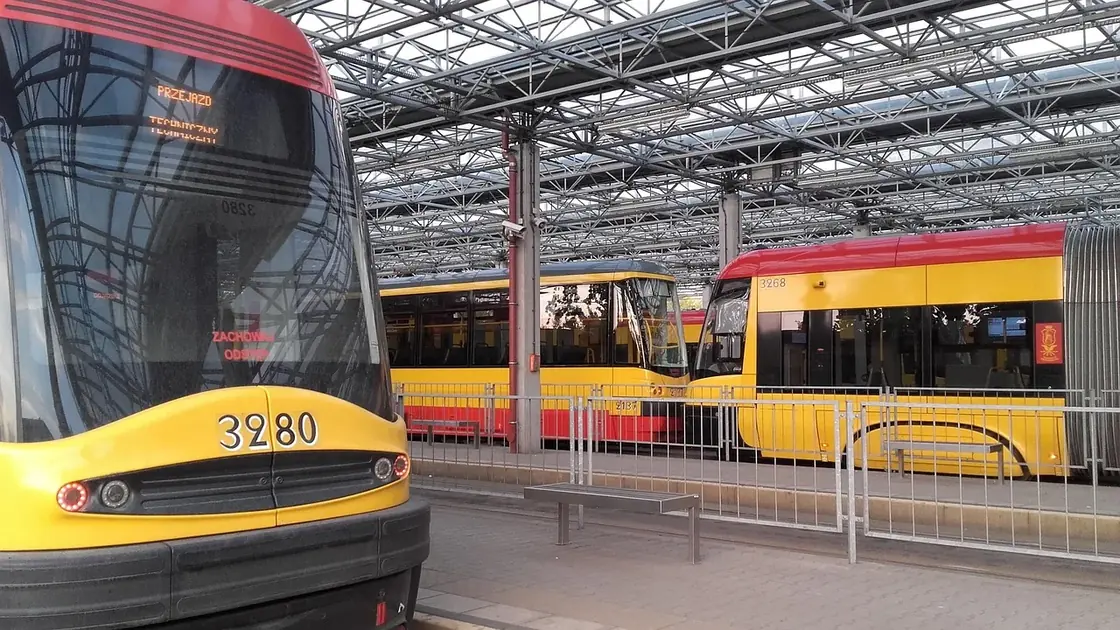
In Kraków, Wrocław, Poznań and Gdańsk, trams are an important part of local mobility. Following a tram route can help you understand how older centres connect with newer residential or university districts. Stops may serve different directions from different platforms, especially at major interchanges. Digital displays are helpful but disruptions and replacement buses occur, so read announcements when a route suddenly changes. A good first-week exercise is to travel between your accommodation and faculty twice: once during a normal class hour and once later in the evening. The comparison tells you more about convenience than a journey time from a promotional accommodation listing.
Validate or activate the ticket correctly
For a Warsaw paper ticket requiring validation, validate immediately after boarding a bus or tram, or at the entrance to the metro paid area. Other cities and digital products may use a different process.
In an app, select the correct city and ticket type, then follow the displayed activation steps. Some products require a vehicle number or QR scan. Look for the active ticket and its validity period; a payment receipt or screenshot of an inactive purchase is not the same thing.
For a reduced ticket, carry the required proof of eligibility as well as the ticket. If you cannot establish that you qualify, resolve the question before travelling on a concession.
Night travel deserves separate planning
A city that feels well connected at midday may have a more limited service after midnight. Night-bus networks often differ from daytime routes, and some stops are moved during construction or events. If you have an early flight, late laboratory session or social gathering, check the actual timetable and allow time to reach the stop safely. Share travel plans with friends when appropriate, especially when exploring an unfamiliar part of town. Ride-hailing or taxis may be alternatives, but compare costs and use reputable services. Transport confidence does not mean taking unnecessary risks; it means knowing your options before you need them.
Cycling and walking are part of the network
Public transport works best when combined with sensible walking routes. University campuses, libraries and student residences may be closer than the map suggests, while a river or major road can make a short straight-line distance misleading. In some cities, public bicycle systems and marked cycle routes offer alternatives during warmer months. Check the rules of the particular bike service and local cycling infrastructure before setting off. Do not ride on a pavement simply because it seems convenient; road and cycle-path rules apply. For any journey, build in extra minutes for an unfamiliar exit, platform or construction detour.
Test your commute before buying a pass
Save the route to the actual faculty building, including the correct entrance. Make one trial journey at a normal class time and check the return after an evening lecture. Record the stop name, direction, transfer and a backup route.
Then compare a period pass with your likely number of paid trips. Include journeys to work or activities, not just lectures, and make sure the pass covers every required zone. Ask your university which student document you will receive and when it becomes valid for concessions.
Learn three signs for disruptions: opóźnienie means delay, zmiana trasy means route change and komunikacja zastępcza means replacement transport. On the day of an important exam or appointment, check service notices before leaving.